It is incredible but true that nearly three months after the Ebola outbreak ended, Uganda is still treated as a source of risk. Epidemiology is obviously not the main driver of this position.
It appears that, along with the baggage we have picked up this year from wars and other disruptions, public health has become an instrument of geopolitics, judging from the facts surrounding the Ebola-related travel restrictions imposed by some of the countries Uganda values most for tourism and business.
It also appears that, given the geography of the Ebola response, Uganda’s separate treatment from its neighbours has not produced within East Africa a shared understanding of the geopolitical moment we are all living through, whether it is the burden of rising prices from the global energy shock or the imposition of travel restrictions, both of which carry the weight of unofficial sanctions on the economy and affect the life and work of almost everybody.
Uganda’s Ebola outbreak has been over since the summer (the high tourist season). It recorded 20 confirmed cases, 15 of them infections carried in from the Democratic Republic of Congo, and two deaths. The last confirmed case was on 21 June, and the last patient was discharged on 16 July. After the required 42 days without a new case, the World Health Organization and Africa CDC declared the outbreak over on 27 August.
However, as of this week the United States still bars most foreign nationals who have been in Uganda in the previous 21 days, and it has renewed its order six times, most recently on 10 November. The Canadians have suspended visas for Ugandan residents until 27 November. I understand from diplomats that this is in tandem with the US position, because Canada does not want to add pandemic politics to its own difficult relationship with the United States.
Then there are Saudi Arabia, Bahrain, Jordan, Kuwait, Lebanon and Mauritius, which have all imposed bans of their own. The United Arab Emirates resumed issuing visas to Ugandans only on 11 November, and it requires travellers to have spent at least 21 days outside Uganda before entry. In short, it is applying the same standard as the United States. Given the scale of this particular outbreak in Congo and the size of the terrain (it has now spread over six provinces and will likely continue to spread), the same logic could keep Uganda on a restricted list for the foreseeable future. I rather think of this epidemic as a civil war with multiple factions (which parts of the DRC in fact are): there is no real solution, and it is therefore capable of dragging on indefinitely.
Uganda’s treatment is positively outrageous, because these lengthy so-called emergency measures are directed at the one country that has contained the spread and that has the most credible record of public health management in the region.
In some ways Uganda’s track record on pandemics, for an African country with limited resources, is a gold standard, so it feels as though it is almost being punished for getting it right.
Few countries know Ebola as well as Uganda.
Its first large outbreak, in Gulu in 2000–01, involved a particularly virulent strain that infected 425 people and killed 224, among them Matthew Lukwiya, the doctor who led the response at Lacor Hospital. The Bundibugyo strain behind this year’s epidemic was first identified in Uganda in 2007. Then came the Sudan virus outbreak of 2022, which reached Kampala and was ended within four months. When that strain resurfaced in January 2025, Uganda and the WHO began a vaccine trial within four days.
Uganda is also known around the world for its long campaign against HIV/AIDS, which cut adult prevalence from about 18 per cent to under 5 per cent, and, less glamorously, for the severe internal measures it took during the COVID-19 pandemic, including the longest lockdown in the world. This robust record, including its work with the United States, a major partner in Ugandan health systems, research collaboration and direct aid, has not led to a resolution of the travel restrictions, which, one may add, also go against WHO guidelines.
Unlike in previous responses, when screening sufficed and countries where outbreaks started were not singled out as threats, today’s changed geopolitical environment treats outbreaks in the same way as terrorism and other crises. International health co-operation began at the sanitary conferences of the 19th century as an effort to keep cholera out of Europe without stopping trade. Ingrained in it, however, was the instinct to treat epidemics in poorer regions as threats to be kept out rather than shared problems to be solved at the source. That instinct has now returned with the politics of migration, which dominates political markets across the Northern Hemisphere, sharpened by the polarising culture and information wars of the internet age.
The United States, Canada and Mexico, for example, framed their measures around protecting the World Cup they were co-hosting. The tournament ended in July; the restrictions on Uganda did not. This may be because once a ban has become proof of caution, or evidence of a tough stance on “infiltration” from abroad for a domestic audience, lifting it becomes a political effort. That is a case for politicians and diplomats, not the global public health community.
It is easier to simply renew the restrictions and look away. The WHO itself has advised against travel and trade restrictions throughout, and the International Health Regulations require additional measures to be justified on public health grounds. The US is an outlier here, since it departed the WHO in January.
Most other major countries still in the WHO followed its advice or reviewed their measures; China and every European government are examples. I read that when Washington asked Europe in June to adopt its restrictions, the European Commission said there was no evidence for them. It is anyone’s guess how the politics of pandemic management will now be affected.
Then there is the WHO Pandemic Agreement, adopted in May 2025. Many governments, including African ones, are waffling and have not agreed to the annex on sharing pathogens, because even where African countries, including stellar performers like Uganda, have co-operated fully, there is often no fair path to vaccines in times of crisis, let alone to vaccine development that could turn around problems like Ebola, which threaten the health of populations and, as in the present case, the economies of countries like Uganda that face debilitating travel restrictions.
Uganda detected, sequenced and reported quickly, one could say religiously, but has been rewarded with a travel ban. A vaccine trial for the Bundibugyo strain is under way in Uganda, but experience has shown that this is no guarantee we will have timely and affordable access to the vaccine when it is ready. Also problematic is the bilateralisation of health aid.
In December 2025 Uganda signed a five-year agreement under Washington’s America First Global Health Strategy, worth $1.7bn in American funding, in which Uganda committed to raise its own health spending by $577mn and to detect, report and respond to outbreaks within set deadlines. The challenge is that this is mostly a one-sided relationship and, as seen in practice, Uganda has zero reciprocal leverage even when its economy is hit by travel measures like those discussed above. Indeed, the arrangement is isolating, and it forecloses anything Uganda might do with its neighbours or other countries to insist on globally binding rules.
This lack of reciprocity is the main pattern in the unequal relationships that have deepened with geopolitical manoeuvring, which reached epic levels this year but has been a constant for some time, especially since the war in Ukraine and Donald Trump’s return to the White House.
IMPORTED INSTABILITY IN OUR TIME
Africa is increasingly bearing the cost of imported instability, with little or no capacity to defend itself. Moreover, the power to inflict harm on African governments no longer takes the old colonial and post-colonial forms that some surviving African leaders would recognise, when occupation or ideological wars led to military pacts, gun-running, the seizure of mineral assets and so on.
In the post-global world, foreign governments with influence over African ones need no occupation or administration. Their power rests on the ability to set the terms of admission to systems others depend on, such as technology, consumer markets, labour markets, aviation hubs and payment networks.
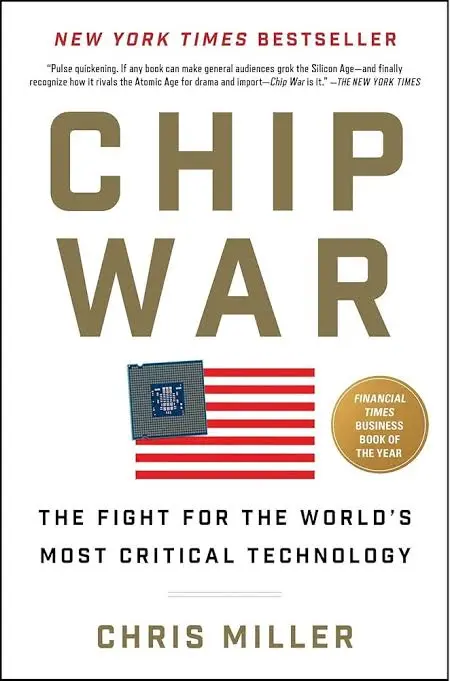
I have enjoyed, but also been shocked by, what is referred to as “weaponised interdependence”, discussed in several books on economic sanctions and how they work (read Underground Empire and Chip War; both are great). These controls were in play, for example, when KLM suspended its Entebbe flights at the end of May, while acknowledging that Entebbe was not an active risk zone, because American entry rules caught its crews. In effect, a US position translated into major losses for Uganda’s tourism sector, compounded when Gulf labour markets, essential to Uganda, also shut their doors.
And so forth.
It is what I call control without conquest. In some instances, such as the war on Iran, the effect is outsize for import-dependent countries like Uganda, which of course played no part in making the crisis but are heavily affected. Some of Uganda’s own policies, such as the decision to back the Board of Peace with troop allocations to Gaza, may indicate the limits of its room for manoeuvre in that relationship. Those discussions, and others, continued even as Uganda and some of its neighbours were punished by direct and indirect sanctions ( the energy shock, impact of travel restrictions raise prices and inflation and so work like new taxes).
In hindsight, one can understand that health policy in Uganda reflects the weight the country assigns to health domestically. When a health crisis is at stake, Uganda will make it a priority over other competing national interests (such as the economy and tourism). This is what happened during COVID. So some may argue that, in the case of the UAE, whose non-energy economy rests on logistics, finance and tourism, protecting that ecosystem from the threat of pandemic disruption is a position shared with Uganda. Tourism in Uganda has taken a hit, but cargo exports between the two countries have continued unimpeded, especially along the gold highway.
I have also been asked about the Gulf labour market. The UAE values Ugandan workers, especially domestic workers, and their remittances matter to many Ugandan households. But some of Uganda’s leaders have not treated the labour pipeline as a priority. The cabinet has in the past debated banning labour export to the Middle East altogether, and thousands of undocumented Ugandans in the Gulf have received little official attention, especially in efforts to align with Gulf administrations on the housekeeping rules for disciplined travel and labour migration. New efforts under way may help rebalance the scales on this issue, as the new Foreign Minister, Ambassador Adonia Ayebare, has prioritised engagement with the UAE authorities.

One sore point for Uganda is the impact of the Bundibugyo label on next year’s Africa Cup of Nations. The tournament is a major investment for the co-hosts, Uganda, Kenya and Tanzania. Uganda has committed an additional UGX 905bn to prepare for it, including roads, hotels, hospitals and a Destination Uganda campaign, against a target of up to 650,000 visitors. A continuing Ebola narrative will likely deter fans from outside Africa and complicate the return of Ugandan fans travelling through Gulf aviation hubs, among others. The Uganda Tourism Board has now made a large bet on the tournament.
One missed opportunity, as I see it, was for the EAC to use this crisis, and indeed the many imported crises of this year, to work more closely together. In June, EAC health ministers agreed to harmonise border screening, establish a regional technical taskforce and share surveillance data in real time. Mobile laboratories were also deployed with German support.
This was in the realm of technical co-operation. Yet the published ministerial decisions since then have contained no joint assessment of the restrictions imposed from outside the region, and I have found no subsequent public position on the matter from the EAC’s heads of state setting out, for example, when such measures would cease to be justified. To be honest, even with limited reciprocal leverage, East African governments do have some standing in the halls of power in places like Washington.
Take the DRC: its strategic partnership with the United States offers American companies preferential opportunities in minerals and infrastructure, while Kenya is a major non-NATO ally and an important maritime security partner. Uganda has signed the controversial five-year health agreement under which the United States plans to provide $1.7bn, while Uganda continues its efforts to strengthen disease detection and response. These are different relationships, but their very breadth creates opportunities for a shared position. That will certainly not happen if each government builds its response around protecting its bilateral business while the regional consequences of the restrictions, and other aspects of imported instability, remain no one’s principal concern.
At the very least, the EAC should publish a joint assessment that distinguishes active transmission from proximity and transit, measures the effects on travel and commerce, and tests the restrictions against proportionate alternatives such as screening and passenger tracing, among other sensible measures. These neighbouring governments, each affected differently and each with relationships beyond the region, could at least agree on what is happening to them and insist on an answer together. There is a lot to learn from the EAC’s own history, and from African leaders in the run-up to independence, about how African solidarity fared in similar periods of geopolitical turbulence: what worked and what failed. Another epidemic or war shall come along, but business should not continue as usual.