
Since we last wrote about Uganda’s energy promise and its failings in the case of Cousin Pearl Mamawi (Rest in Eternal Piece) a lot has happened. The most important is Pope Leo’s Encyclical on Artificial Intelligence which has an inverse relationship to both humanity and energy ( computing at the level of the latest Large Language Models) demands such huge amounts of energy that it will eventually compete with ordinary uses such as cooking and lighting for energy poor countries like Uganda ( a bit of this shortly). The Pope’s message was essentially on responsible boundaries in the relationship between man and technology.
Since we last wrote too, one proselytiser of the Africa energy poverty argument, that Africa should not be ham stringed in exploiting her energy resources including oil, Canon Ruth Nankabirwa Ssentamu (Dr) will be stepping down from her pulpit as Minister of Energy and Mineral Development of Uganda.
She is being replaced by a scientist, a veterinarian Dr Monica Musenero.
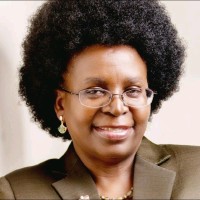
Until recently Dr. Musenero has been leading a quiet revolution in technology at the Ministry of Science and Technology whose most public product are elegant full electric buses (just three for now) on the dirty, and often polluted streets of Kampala. These green air conditioned locally assembled beasts can be seen slithering like aliens amongst a sea of boda bodas (motorcycle taxis) which swarm the streets squeezing out other road users, dominating pavements, walkways and pretty much any navigable route. The tug of war between dirt fuel boda bodas and the green electric alien-buses is well articulated in Uganda’s development plans which stipulate that a great industrial effort will eventually produce enough of these buses to rescue the average passenger from the two-wheel peril of the boda boda ( especially the dirty fuel variety) but in the meantime also supports a growing number of (wait-for-it); electric motorbikes.
Uganda is an energy agnostic.
There is no commitment to clean energy in the moral sense that it can save the planet. There is a practical approach to energy. The country relies on clean energy because that is produced by its rivers. There is neither a cult following for fossil fuels as a mecca or development paradise in the way that African countries are often described as scrambling for the spoils of the promise of oil and ending up with broken societies in what is often called the oil curse.
The middle-ground that Uganda seems focused on is programmatic – based on its 5-year plans though these have been dosed with an ambitious plan to grow the economy by 10-fold, a mildly religious ambition given its record of project implementation. Thus, when the new Finance Minister read the national budget this week, often preceded by prayers about God and Country, I expected to read a bit about energy and electricity and its plans to fuel the drive to the numerical paradise of a US$500 billion-dollar economy.
There were some psalms but no great calling in that speech (see for yourself). Well, you see Uganda’s electricity problem is usually described as a surplus. Right now, it produces well above what it can consume mostly because access (or distribution) is weak. In short consumption reflects access not demand.
The budget speech did not mention even once the Uganda Electricity Distribution Company. It should have. One of the principles that Dr. Musenero is known is the domestication of industrial and technological capacity as mentioned above in relation to electric buses produced by Kiira EV in Jinja (Kiira or Kiyiira is the local name of the River Nile which begins its journey in Uganda). In short, the direction of travel as per policy which the new energy Minister will implement will be based on local production or re-production of green technologies including EVs.
The excess electricity production, as indicated in the Budget Speech, will be committed to long term industrialisation. Here are some thoughts on this (mine).
If Uganda has hundreds of megawatts of energy capacity now (which is not yet serving industries and businesses including future manufactures of EVs presently), what the natural alternative use for this “excess electricity” amidst a fuel crisis? UEDCL which inherited the national distribution system (and added yet unresolved debt has had a fair first year (UGX1.71tn in revenue, 236,000 new connections). It also took on a US$50 million ABSA facility to bang on with the upgrade of its network. This network however is not serving the fill demand quota, and access remains below 20% despite the installed capacity.

(above Outgoing Energy Minister Ruth Nankabirwa at ADIPEC in 2024)
It is like having a full store of grain but selling a few hundred kilos at the mill. The extra grain could be well used for making a different but saleable product. If it were not for the focus on home-grown production UEDCL could be selling this extra electricity to electric vehicles and motorcycles. This would at the present require an intermediate policy to lower the barriers to their entry at port, work with EV producers for appropriate models and begin the journey towards ending the used car market in Uganda.
Uganda’s Energy Transition Plan (Ministry of Energy) aims for universal electricity access by 2030, which means adding hundreds of thousands of household connections every year. It also expects electricity consumption to grow faster than any other energy source, rising from today’s very low per-capita base to a level by mid-century more consistent with industrialization. What this means is that in the not-too-distant future, if access improves, if industrial parks use power at scale, if electric cooking grows, if irrigation and cold chains expand and if transport electrification moves beyond pilots, Uganda’s apparent cushion could narrow pretty quickly.
That would be good news for the power sector. It would mean the country’s generation investments are finally being absorbed. But it would also mean UEDCL cannot treat the current surplus as permanent. But that day is not this year or next year or the one after.
Therefore, conceivably UEDCL can get into a new business spending some of its money on a wider coverage of charging stations with government encouraging private players who are building more fuel stations than schools to follow suit. The market for electricity is already perking up with electric bodas now preferred by boda boda riders . They are turning to these because they are cheaper in the long run ( makes sense given the fuel squeeze) and easier to service.
A vast market for new electricity customers thus awaits UEDCL in this segment. Uganda’s mobility transition I must say has not begun with private cars, as it has in Europe or North America. It is taking shape with public and commercial transport. There is a document, the Uganda E-Mobility Outlook 2025 which suggests that in sub-Saharan Africa the transition to electric motors is being led by paratransit, which carries much of the daily commuter burden. This is true. Uganda’s own transport system is now built around boda bodas for short and medium trips, with taxis carrying passengers along urban and peri-urban routes.
A petrol boda boda consuming several litres of fuel a day faces a daily bill many times higher than the electricity cost of an equivalent electric motorcycle. At scale, each electric boda boda becomes a small but repeatable electricity customer. So, one hundred thousand motorcycles, for arguments sake, shall create a serious commercial load. Fast forward a million electric bodas could reshape UEDCL transport revenue base.
I have of course been on this side of the argument suggesting in the past government put a hard stop deadline for importing combustion engine motorcycles. But given what we have said about energy security in the context of global geopolitics, it is conceivable that a new market for EVs can constitute part of this fortification.
But there are positive signs. Uganda’s E-Mobility Outlook reports cumulative investment of more than $175mn in the EV ecosystem between 2018 and 2025. It says production capacity rose to around 79,000 EVs a year, more than 20,000 EVs were produced in 2025, and the battery-swapping network grew to more than 540 stations, reaching about 80 per cent national coverage. That’s progress, even if by baby steps given the volume of the boda boda industry. This is in part because the National E-Mobility Strategy is designed for Uganda to become a net source of e-mobility tools and solutions, rather than a passive consumer. Its targets are local EV manufacturing, battery manufacturing, public transport electrification, charging infrastructure, skills, uptake and standards etc.
Well of course Uganda should not replace dependence on imported petrol with dependence on imported electric vehicles, imported batteries and imported software. We should capture value in assembly, battery packs, power electronics, charging systems, servicing, recycling, fleet software and grid management. But the strategy’s goals are long term (500,000 units of local EV production capacity a year by 2030, up to 65 per cent local content and a domestic battery value chain producing more than 1GWh annually by 2040)
Industrialization takes time and in the meantime the fuel squeeze as well as the extra electricity capacity require a practical medium-term goal to support a market for imported EVs ( new cars) and expand the electric boda momentum with greater manufacturing and supporting infrastructure. This is really the opportunity that UEDCL needs to review.
Car owners will be feeling the pinch this year and more than a few I know are thinking EVs because of the annual savings it could mean at the end of year. During the budget reading last week, the government raised excise duty on petrol and diesel by UGX200 a litre, the single largest new tax measure in the package. Well, for a boda boda burning 3.6 litres a day, that adds about UGX720 a day, or roughly UGX216,000 a year, before any further oil-price movement which could still happen.
Excise duty on motorcycles at first registration has also gone up from UGX200,000 to UGX500,000, with a new UGX30,000 stamp duty on registration and transfer. The budget speech did not make an obvious carve-out for electric motorcycles. In short government is taxing the fuel problem and raising the entry cost of one of the fastest electric solutions in the same fiscal package, a position reflecting its revenue first approach.
A purely local-production route protects Uganda’s industrial ambition, but risks slowing adoption especially when the government is focused on revenue as seen above. On the other hand, an import-led route could scale faster, especially through cheaper Chinese EVs but risks creating another dependency. The answer lies in a bridge that acknowledges the price challenges of fuel as of today and also takes advantage of the unused electricity capacity.
The latter leads to revenue for UEDCL and the treasury too.
So, lets import where necessary, assemble where possible, localise where credible and reserve public support for firms that build Ugandan capability. Imports that receive tax incentives should be tied to local assembly, technician training, approved battery and charging standards, safety data, recycling obligations and eventual local content.
This template exists already UNION and Spiro had deployed more than 13,000 electric motorcycles by the end of 2025, while the associated swap network grew from 104 to more than 320 stations. SafeBoda, Zembo, GOGO, Glovo and others are also building fleet, platform and charging relationships. The E-Bus Xpress is encouraging. It has reported carrying more than 297,000 passengers over 445,000km in 2025 using seven Kayoola electric buses. Kiira’s plant has reported installed capacity of 2,500 buses a year (Uganda’s strategy targets at least 15,000 electric buses for mass transit by 2040) another set of low hanging customers for electricity.
In conclusion UEDCL could therefore organise its next investment cycle around the highest-value loads: bus depots, boda boda stages, market centres, logistics parks, universities, airports, industrial parks and intercity corridors. These are the places where transport demand, commercial activity and grid reinforcement overlap. With time-of-use tariffs that make off-peak charging cheaper, regulated battery-swap standards so riders are not trapped in incompatible networks, solar-hybrid and battery-buffered stations in weak-grid areas, public-private charging hubs where UEDCL keeps a stake in the meter and the data, and concessional finance tied directly to distribution upgrades for transport corridors, a business is waiting.
That’s the pitch.