Hunting parties in parts of Northern Uganda are rare to come by.
The last traps I was shown were by a tour guide during a game drive in Murchison Falls National Park. As for me the last hunting party I saw may have been in 1987 while on a visit to Yumbe District. Groups of young men carrying traditional nets, bows, spears and axes were crossing the road. It generally means that another group had moved ahead. Given the number of firearms in these parts and the martial history of the tribes it was interesting to witness. But then even today smart phones in these villages stand in stark contrast to the hand hoe, which is still used for cultivating the land. The nets, which are woven with sisal and other rope, are meant to “ambush” the animals. After they have been set, a smaller group of hunters moves through the bushes causing a ruckus, burning some bush and blowing horns.
The “war sounds” send the duikers and Kobs and other animals into the nets and waiting spears of the hunters. In the earlier days the return of the hunting park was an exciting time. Young boys are taught to skin dead animals and dry them. Normally the leaders of the pack make sure that every home has some meat even households with widows or the unfortunate old man whose sons have all died or left the village.
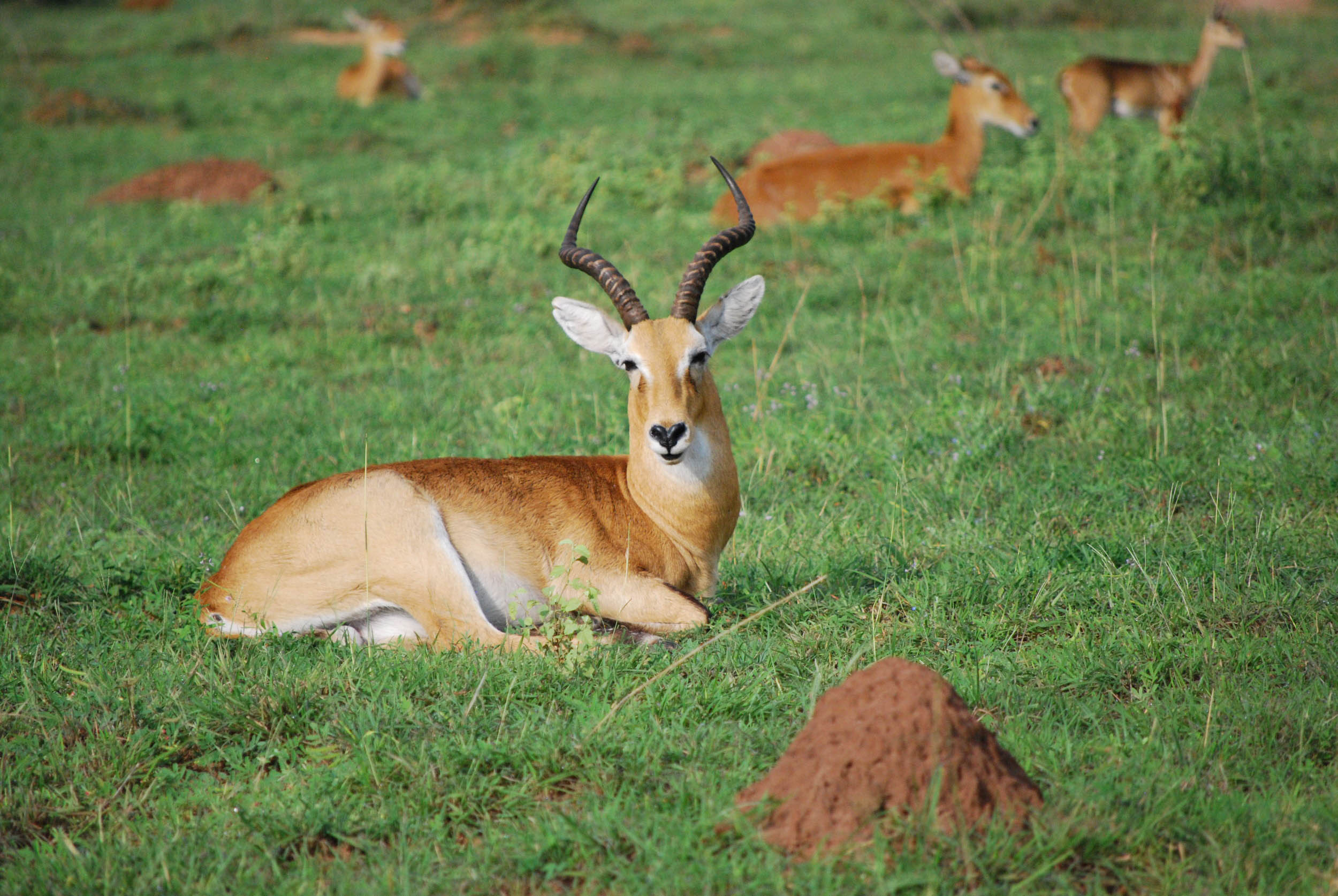
The principle of the hunt is interesting. In Ma’di culture and tradition if you cornered a Kob and stabbed it in the heart you claimed the prize, which involved the best parts of the animal. However the person who thrusts his spear into the animal next was a second claimant. After the two of you, the rest of the beast is carved judiciously.
There is a story told to us as youngsters about a greedy man who could not wait his turn when an Elephant was downed and how he lost his testicles. He had been watching representatives of families leave with their share. Unable to contain himself any longer he took a knife and plunged naked into the beast from one end. On the other end the carvers continued grabbing and slicing.
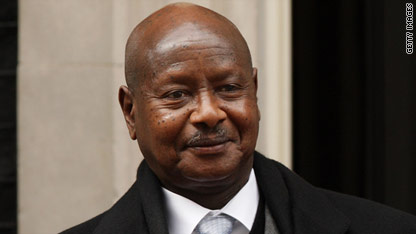
“ Its me who has hunted. And after killing the animal they want me to go. Where should I go” is a quote attributed to President Yoweri Museveni that has become a popular jibe at the dilemmas of sharing.
Yumbe district is one of the poorer Ugandan districts.
The people here are mostly Lugbara and Nubians. One of its more famous sons is Gen. Ali Bamuze, who was the official head of the defunct Uganda National Rescue Front II and a relative of former MP Godi Akber who has been jailed for murder. Yumbe was Uganda’s only Muslim majority district elipsed now by Butambala I believe. The late Ali Bamuze, a Muslim soldier and Joseph Kony a former Catholic shared training camp in Sudan under the auspices of the Khartoum government. Indeed Joseph Kony as we have written before begun as a Comboni alter boy. The Comboni Missionaries are the catholic order that evangelized Northern Uganda.
This rich mosaic of religion, tribes and the hand of history has surprising twists and turns like the pounding of the village mortar , a hollowed tree trunk, that is used to smash sorghum before it is ground. Every seed is affected as the heap is turned around and inside out by the pounding, sometimes to the singing and laughter of young women trading stories and gossip.
In the year 2012 the Catholic Church of Northern Uganda celebrated its centenary. A hundred years prior the first missionaries entered Uganda via Sudan following the same path that Nubian Muslim soldiers later did to Islamise Yumbe. The mainly Italian priests had actually been encamped in Sudan and awaiting permission to enter Uganda from the British authorities who had control and wer based in Buganda (Central Uganda today). The central kingdom had a beachhead of violent religious confrontation so violent that in places like Butambala horrific slayings and burning of muslim converts (tied to trees) were recorded. It must be added that Cwa Kabalega, the Omukama of Bunyoro who had family and strategic ties to Northern Uganda and specifically for the Ma’adi who supplied him with iron for his weapons and grain stores for his men, was allied with the muslim factions in the Buganda Court. Several local chiefs in the north where he was finally captured would join him in exile.
The man who eventually led the expedition to establish the Catholic Church in the broader north however was not Italian but a German from Bavaria.
Bishop Franz Xavier Geyer is the founder of the Catholic Church in the north in fact according to Bishop of Arua Diocese Sabino Ocan Odoki who I interviewed in Kampala. He said the Mill Hill fathers had been resisting the advance of the Catholics down the Nile and had prevailed on the British to deny the Comboni’s permission. “ Permission which was later granted involved an American President” said Bishop Sabino. More of this later. After they received permission the Combonis first travelled down the Nile to around Packwach today in an area that is part of Murchison Falls National Park. However the plague of Tsetse flies drove them away. The new parish they built, where centenary celebrations to mark the 100 years of the Church in the North was planned, is a place called Indriani (this in Madi means “Like a goat”) in the present district of Adjumani ( which translated means ” a spear for me”). The church of Indriani was later transferred to the higher altitude site of Moyo (pictured) where I too often went for mass and catechism as a young boy.
As history would have it the site of Church was destroyed during the reign of the ultimate Nubian Muslim soldier, Idi Amin. The story of Indriani gets especially spicy with 2012 with the Church’s most unlikely relations. It so happens that in a small village bar in the Austrian town of Unteroberndorf called “ The Green Hunter” a study group led by Yoweri Kaguta Museveni met between 15-18 June 1985 to draft a manifesto for running Uganda if they were successful in concluding a guerilla war against the government. The result was the National Resistance Movement Manifesto known as the 10-point program. The meeting was attended by the Harvard trained German political scientist, also a conservative Catholic Charlotte Teuber. Another character to feature prominently in Uganda-Austrian relations is the catholic priest Fr. Albert Byaruhanga (R.I.P). Byaruhanga till his death was a Presidential advisor to Yoweri Museveni embodying the continuing controversial relationship between the clergy and politics
Austria does have an indirect relationship with the history of the Church in Northern Uganda. “ Daniel Comboni would have been Austrian except that during the wars in Europe the part of Austria became Italy” said Bishop Sabino. Amongst the guests expected to attended the Catholic centenary were thus a strong Austrian Catholic contingent. Amongst them members of the Uganda-Austria friendship society led by the ranking Bishop of the armed forces. The celebrations will took place on December 2012.
Finally the evangelisation of northern Uganda may have been delayed if not for the intervention of Theodore Roosevelt, the former American President. “ Roosevelt was an accomplished game hunter and was passing through South Sudan with a party of 500 people including several carrying his hunting trophies. The Comboni’s asked him to intervene with the British and allow them to cross into Uganda. He did so by sending a telegram to the British governor in Buganda” said Bishop Sabino. Theodere Roosevelt’s safari, which helped Ugandan Catholics, is chronicled in the book “African Game Trails”.
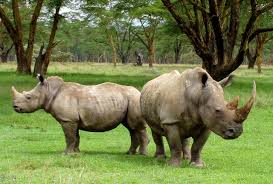
Note: Roosevelt shot 5 White Rhino’s at Ajai. The story is in his book. In 2026 the Ajai Game Reserve received the first population of (4) Rhinos as part of an effort to repopulate these animals that had been killed off especially for their horns.