
At a restaurant on Sunday 5 July, a friend was unable when they arrived to pay for their cab. The application was down as the payment system. It turns out that she was unable to call a patient at a hospital nearby because calls would not go through. All over the country customers of MTN and by infection, because the company’s computer servers were connected to several banks could not transact and communicate effectively.
After a few inquiries, I was convinced this had been a hacking event. Uganda’s cybersecurity architecture like others in the region is vulnerable but stable. The folks responsible to vital assets overwatch had certainly flagged the MTN network failure as fitting their threat assessment matrix.
Officially, the company reported that a power disruption at one of the company’s data centers affected all voice calls, mobile data and MoMo services for several hours. Indeed, MTN later ruled out a cybersecurity incident adding that customer data remained secure and mobile money balances were safe. It restored services and life has since moved on. Uganda, which is implementing second generation reforms of its electricity sector, has seen no less than two national blackouts, and the government has gone on to shakeup the new state-owned and operated distribution company. However, even then, for sensitive servers a complete failure is a severe occurrence. It means built in fail safes such as back-up generators and back-up servers along the line, all collapsed. For critical functions, servers are set-up to hand off to other servers during crisis events.
Regardless the event highlights the challenges of an integrated financial system that has been recharged with technology today.
Several aspects of this were present in the MTN network failure. For the person trying to make a call it was a telecommunications outage. For the trader waiting for a payment, or the uber driver expecting mobile money or the family trying to send cash, it was something closer to a financial shutdown. Internet based businesses lost access to their customers that is because apps that authenticate by SMS or depend on mobile data became were now unreliable. Some bank customers also reported difficulties on digital channels during the same period, although the causes of every affected service were not necessarily the same.
Thus, a single technical failure had cascaded into several areas for a company that holds essentially a communications license.
I was thinking about this when the Uganda Communications Commission welcomed the new television service a month later, on 7 August. I am a huge fan of streaming services and Afromobile, Next Media’s product sits on top of the pile locally.
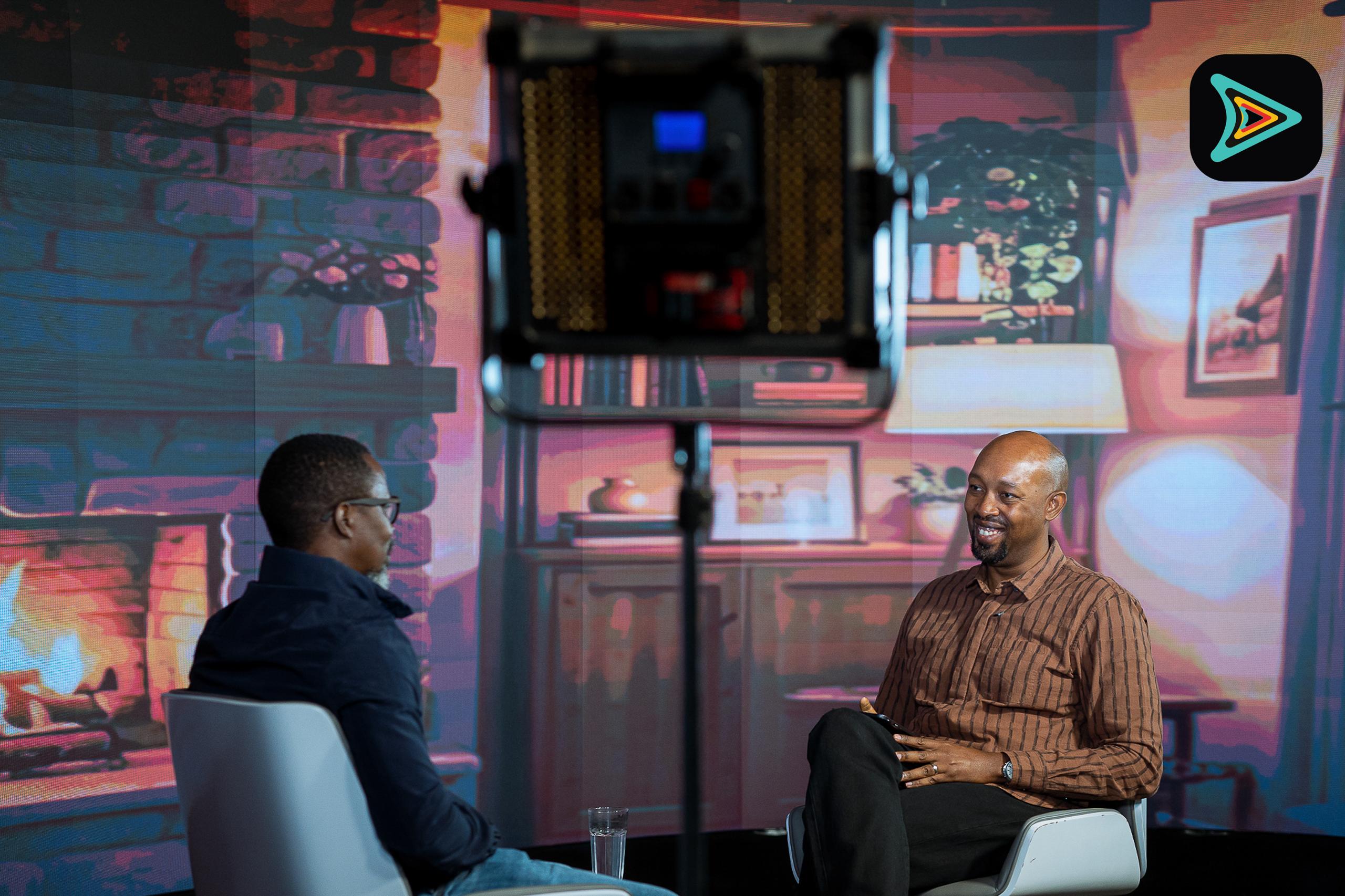
Above ( The Long Form Podcast on AfroMobile) also featured Sarah Shortie a Tiktok sensation.
But if the same outage happened after MTNTV had become important to a large audience, what would we call it then? A telecommunications outage, a payments outage and, for some viewers, a partial media blackout? I have been arguing for many years that telecommunication companies need to occupy a new category precisely because they do not present a single line of service but rather that they are now part of a utility scale infrastructure that is essential to many. Their services on the mobile phone connect the economy via several nodes and for regulators, an ecosystem approach is now unavoidable because that is what it is.
When fragility appears UCC has responsibility for telecommunications, data communications and broadcasting but Bank of Uganda enters where payments are affected. Meanwhile a data breach would bring the data regulator into the picture while a cyber incident would involve another set of institutions and issues.
The July failure, MTN said, was neither a cyber incident nor a loss of customer funds, so not all these powers were triggered. Still, one failure sat across several jurisdictions. Uganda is one of the outliers when it comes to Mobile Money integration the last twenty years has innovated via market and state intervention a mobile phone revolution. The handheld mobile phone is now the primary media, a newspaper and television set, a bank branch and betting shop, taxi stage, a marketplace for goods and services and, for many people, the first place where the country presents itself each morning.
The evolution has been so successful that are inadvertently unaware that all these functions sit on top of the same infrastructure. As with the MTN outage we live within this convergence at and only rediscover fragmentation when there is a failure.
The Next Media Service (NBS/MTNTV) coupling is an interesting juncture for reflection for regulators and customers alike. MTN, the telco does not make the programmes. AfroMobile Media Limited, part of the Next Media stable, supplies and aggregates content while MTN describes itself as the technology facilitator and application developer. A subscriber, to the service they jointly offer will sign in with a mobile number and a one-time password, watch over their preferred content on the MTN network, uses data and, where premium content is bought, pay for it via MoMo.
The architecture behind the screen is several other things which are connected to how the same customer lives and works. My first question when the service appeared was whether MTN might, in time, become Uganda’s biggest media company. It is in the enviable position of doing a deal for content access when it already possesses a large audience relationship because of its customer base. By June 2026 MTN Uganda reported 25.4 million mobile customers, 12.6 million active data users and 14.8 million active fintech users. In the first half of the year, it reported UGX 1.888 trillion in revenue. Meanwhile UCC, looking at the wider market at the end of 2025, counted 47.1 million active mobile subscriptions, 36.3 million active mobile-money accounts and 18.5 million internet subscriptions. Even controlling for the two SIM card per subscriber it is a formidable foundation. Traditional media where I have worked must convince advertisers that they have a relationship with audiences. This need not apply to MTN or Airtel if they enter the attention economy. Telcos arrive with the audience, their phone numbers, the network on which they communicate, the data they consume, and a payment system used for everyday services.
They also have an important financial ace up their sleeves. A broadcaster normally needs advertising, sponsorship or subscription income to justify content. A telecom can spin yarn around the same content. Popular content consumes data, encourages use of the wallet, can reduce customer churn and makes the larger bundle of services more useful. It also demonstrates customer behavior in ways that no other business can understand but for the telecom (more of this soon). In short market power that is built in one business aid into another.
Kin Kariisa the head of Next Media put all of this in perspective in an interview on Next Media’s acquisition of Capital Radio. He highlighted his company’s approach as an ecosystem approach bringing multiple audiences into one integrated service from television and radio, digital publishing, streaming, creators and influencers, events, ticketing, production, marketing and technology. His ambition he says is to reach 30 million Ugandans every day across television, radio and digital by June 2027. The gist of all of this, in commercial and strategic terms is “conversion” because within the ecosystem it will be clearer how the audience chooses to spend. Did they buy, subscribe, register, attend, download, pay, change brands or perhaps change their mind? In the old advertising business much of this was guesswork, expensive guesswork in fact. Digital systems promise to close the distance between attention and action. If that is the play Next is going for, we can also ask if Next Media, strictly speaking, still only a media company?
Meta (Facebook/Instagram) is called a technology company because it owns technology, a media company because much of what the world reads and watches passes through it, an advertising company because advertising pays the bills and a communications company because billions of private conversations sit on its services. All these descriptions are true, of course and each separately is inadequate. This is the attention economy landscape.
It appears to be similar now for Next Media and MTN TV.
Karisa’s media enterprise has journalists, presenters, studios and brands, makes news and entertainment and now has more radio in the stable after the Capital acquisition. However, by his own formulation media influence can help generate money from other services and those services can in turn pay for good journalism, a truly 21st century pivot for an industry where the old advertising model is under pressure. The alignment with MTN implements a symmetry where MTN can use money made around connectivity, data and payments to support content which is useful to the wider customer relationship. Next can use money made around streaming, events, ticketing, technology and other services to support journalism which may not pay for itself.
Both companies are surpassing the normal categories for which regulators and planners are set-up, and it is most interesting.