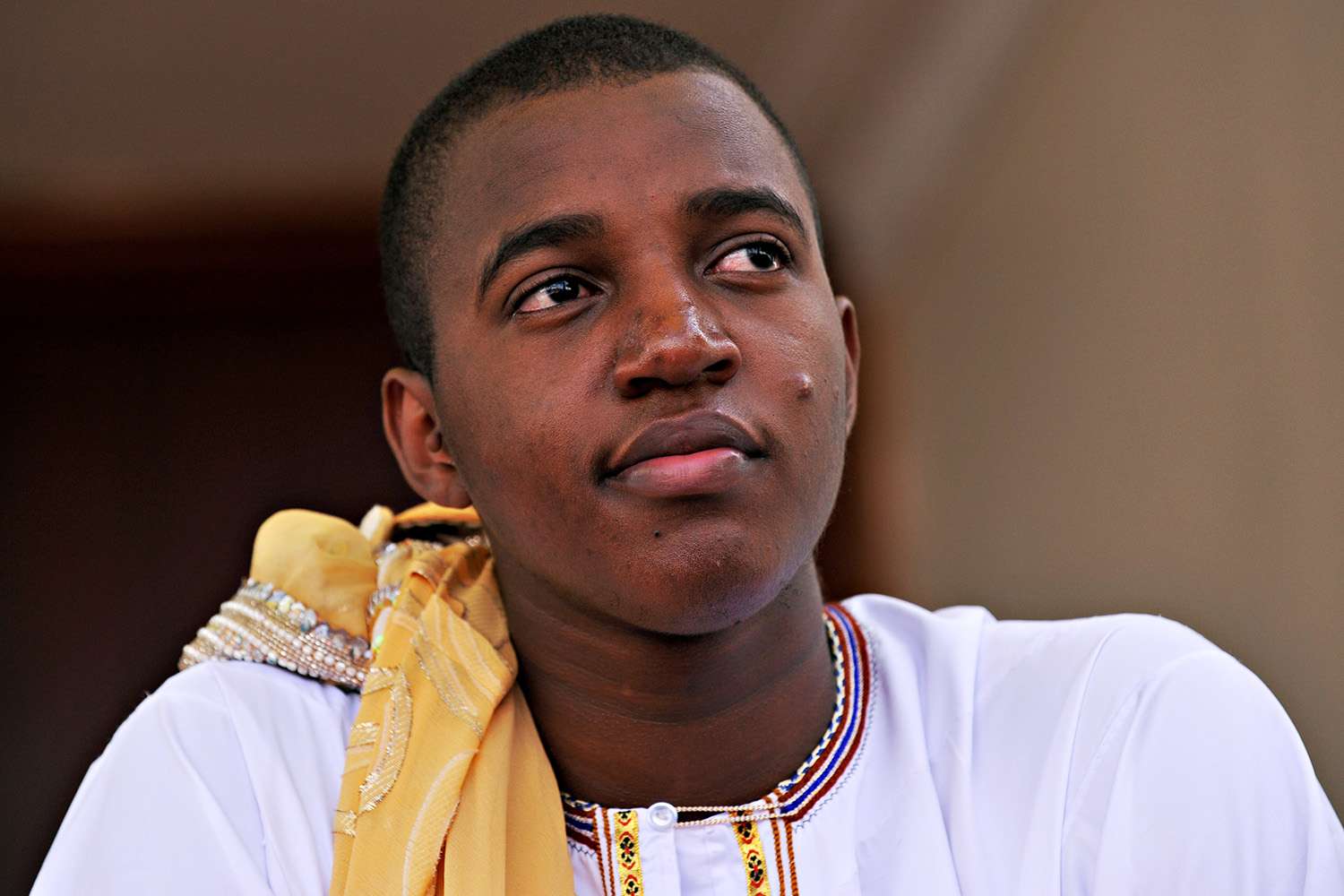
Like many Ugandans, I am still taking in the death of King Oyo Nyimba. Many people have things to say about the late King, who in death has brought so many Ugandans together in a way that has not been witnessed recently.
As it happened, I was in Hoima when the news of his passing came. So I visited the tomb of his relative, the most famous of the Babiito leaders, Omukama Cwa Kabalega. It was my second visit to his resting place. I remember feeling quite at home the last time I was there. The grave is covered with many ordinary items of the kind found in homesteads in the north and north-west of the country. During that last visit, which took me on to Buliisa, I understood why.
Hundreds of years of contact between people along the western rift valley, along the Albert Nile into West Nile, Lango and Acholi, and further into Sudan, have left their mark on this land. If one is aware, it can be witnessed in the way of life there. Languages and customs have melded the way they do after years and generations, but more should be said, especially in the wake of the young King’s passing, of what we have in common and how it is rooted in history.
So in this mourning period I turned once again to the priest Crazzolara, whose books on the language, heritage and customs of this wide area have been a comfort to me. Joseph Pasquale Crazzolara died in 1976, just two years before I was born, but he spent much of his pastoral energy and incredible mind on the oral history of the area.
So while I know the relationship between Tooro as a contemporary kingdom and the ancestors of Oyo Nyimba, the Lwoo Babiito, I returned to his volumes, and to others, to root my grief, and that of many of my friends, in the threads that bind us, beyond the social media coverage of his death from cancer.
One of the issues, speaking of social media, was how a King is chosen. Well, it turns out that upon the death of a King, in the shared customs of this corridor, the successor is more made than chosen. The adjacent Lwoo ( I use Crazzalora’s spellings and language) and surrounding communities offer hints about this. Political authority is both practical and spiritual, with a Rwoot or Opi as ruler and a keer or Ojoo as spiritual linebacker. These were the key institutions of the old order.
In the Lwoo area, the Abila is the ancestral shrine through which a ruling line remains connected to its dead. In the old custom, ideally a Rwoot will indicate his choice of successor before he dies. Death invites crisis, and so the culture is primed to avoid it if possible. A royal death in particular creates a dangerous interval in which the body of the dead king, the ambitions of his sons, the authority of clan chiefs, the wishes of the people and the judgement of the ancestors all have to be brought into the same order.
This is why, amongst our people, burial and succession are a single, continuous event, not consecutive events as in the modern tradition. If a Rwoot, to use the example of the Lwoo, has several sons, he might ask one of his wives to prepare kwon, a stiff millet porridge, in a small plaited basket, the kind you will find placed next to Omukama Kabalega in his resting place.
Into the kwon the Rwoot places a bead while naming the son he prefers. He hopes, it is believed, that his choice has the blessing of the ancestors and the people. If his favored son finds the bead while eating, it is a good omen. If, on the other hand, he does not find the bead, it could be that this choice is his father’s and not the people’s: a sign that others should lead, because the ancestral spirits are weighing in on the future of the clan and the people, and on whom they want as custodian of the Abila, the shrine which links the past to the present.
This is how tradition treats the choice of the Rwoot or King. It is a proposal, never an appointment. There are times when the death is unexpected. If this happens, tradition dictates that it is kept secret. The reason is that, again, there cannot be a rupture in the thread of leadership, in order to avoid chaos and deflect bad luck from the community. If a Rwoot dies this way, the ladipo, the senior court officer, a kind of “prime minister” in modern parlance, together with the wives of the deceased Rwoot, sends secret messages to the various chiefs and clan heads. The chiefs, or Jegos as they are known, meet in council. Since succession is not based on primogeniture as an automatic right, this council discusses which of the sons possesses the right character and qualities to win the sympathy and respect of the people and become a just and wise ruler. Each chief states his preference until agreement is reached.
If there is a common choice, that prince is summoned and asked to put a special bead in the mouth of his dead father. The corpse remains in the hut for two days; thereafter the royal drum is beaten, and the community is finally told that its Rwoot is dead. In the old days a bull and a ram were tied in the courtyard. The council places a spear in the hands of the chosen son, and he wounds the animals for his father’s burial.
However, the Lwoo and their cousins in the north and north-west, as I have said in the past, are republican in nature. In short, even the funeral of a dead Rwoot can open up a contest. The council may have chosen and the announcement been made, but a rival prince may appear. If this happens and many chiefs cross over to him, others, such as the wives of the deceased Rwoot and other leaders, are required to follow and make their choice.
At this stage, if one side is visibly stronger, the minority is expected to join it. Sometimes a fight ensues to settle the disagreement, and it is not unusual for mock battles to be staged, with spears and songs, to indicate assent. Once the choice is obvious, the Jegos, the chiefs and elders, use the funeral to obtain public affirmation of the rightful heir.
They ask, “Who do you want to take the place of the Rwoot?” Once the elders have affirmed the candidate, the prince is seized and placed on his father’s stool. The royal drum is beaten vigorously. Beads are tied around his neck, wrists and ankles, rings are fixed on him, he is dressed in ceremonial hides, and a royal spear is put in his hand. Before the people, the elders speak to the prince about his duties and what his office means to them. He is, for example, to bring rain in season, protect the harvest, be generous with food and refrain from consuming the property of his subjects. He is also warned that if he is harsh and unfair, the ancestors will withdraw their favor and the service of the keer (the spiritual leader), and a new leader will be found.
The next day he sits by the shrine, and the elders continue to instruct him; he hears from the various chiefs and leaders about how to govern and what to expect.
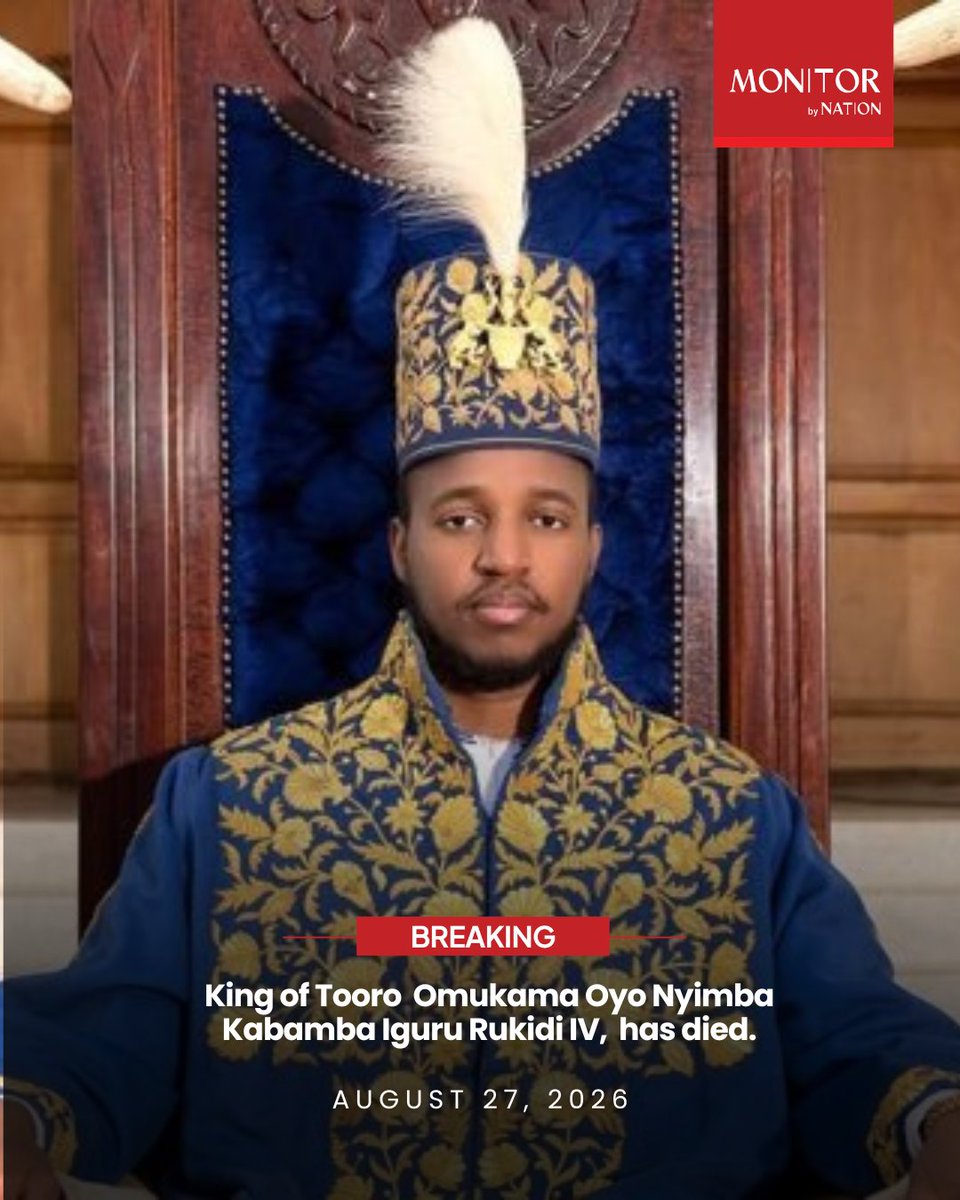
I guess the lesson from this past speaks for itself. This is of course a very old code, present in many shared forms amongst the Nile societies. Tooro is much younger, springing forth from Bunyoro in the nineteenth century, its royal house tied to the Babiito dynastic order it shares with Bunyoro.
King Oyo’s death has been a very public one. In many ways the people are witnesses, and they have been asked to be united, calm and prayerful as the Babiito clan identifies the next Omukama and announces him this weekend.
Perhaps the syncretism woven into these Nile societies is less present today (his coronation in 1995 enacted some of it), but it is reassuring that the elders say tradition will be followed. One of the lessons of Crazzolara’s study of the communities in this area is that the relationships overlap heavily over time. It is a big historical corridor that runs down the Nile from what is now South Sudan through Nimule and the northern Uganda borderlands, west and south-west across Acholi, Ma’adi and Alur country, then towards Lake Albert, where the histories of the northern societies begin to overlap with Bunyoro. Adjacent to Bunyoro, and in special relationship with it, are what we learnt in school as the interlacustrine kingdoms.
It teaches that what is shared is a two-way street, and that the medley of societies and the alchemy of culture are rich and must be reckoned with. Young Oyo Nyimba, now a symbol of national unity, may claim this as his legacy. As he is laid to rest and succeeded, I hope his people establish a civic center to honor what we share and can pass on to the next generation.