Uganda’s oil bill passes but what does it mean?

Museveni12Late Friday afternoon  Ugandan Mps voted on a margin of 149-39 to pass the Petroleum Exploration and Production Bill 2012. Once it is signed into law by President Yoweri Museveni it shall constitute the primary law for governing Uganda’s promising oil sector. Two other bills, a midstream and downstream bill remain. The last , on revenue management, promises the fireworks that have accompanied the passing of this one.

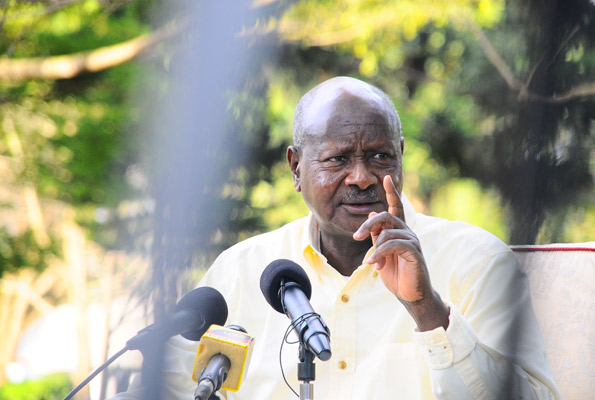
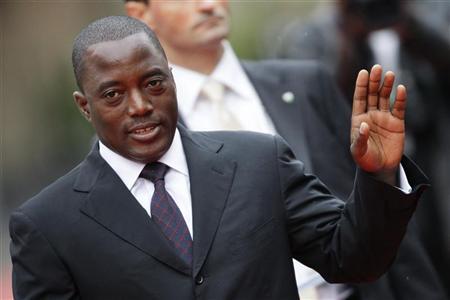
The Friday vote reminds one of  how healthy a  discussion for the Ugandan Parliament -electronic voting will be. Nonetheless one lesson to take away from the Petroleum Bill is that it was more serious outside than inside. It is one of the most negotiated pieces of legislation in recent history. Its fate was determined by nearly 8 caucuses of the ruling party , tons of phone calls many made by or on behalf of President Yoweri Museveni ( pictured) to rally the troops , a failed parliamentary coup that could have left it without a Speaker, what could have been a constitutional crisis and an unprecedented use of the media by both those in support of and opposed to the bill- to mobilize sympathy for their positions.

This episode of political gymnastics has been as polarizing if not more than the decision in 2005 to lift Presidential Term Limits. The lawmaking process has also shown what is possible when well-financed civil society groups team up with motivated lawmakers.

It also poses a rather ironic question. Prior to this level of public engagement Uganda had an increasingly strong negotiating position vis a vis the oil companies and other actors. Most famously was the decision taken by the Executive on the so-called stabilization or protection clauses- mainly without the help of parliament. The standoff over clause 9 which produced the dramatic results of Friday afternoon was about the power of the executive. Its important to note that by contrast executive actions in the oil sector have been strong in the public interest. However they contrast weakly with the record of the government on public trust especially in the shadow of public scandals that have accompanied the lawmaking process for the oil bill like flies buzzing around to signal decay and infestation.

Now that the law has passed the next series of actions will focus on the inauguration of the institutions it will create and the lifting of an unofficial freeze on new licenses for oil exploration.There are many implications of this law that we shall track closely on this blog.

For now let me endeavor to make some broad arguments.

My primary approach to the subject of oil in Uganda, and by extension a number of African and other countries that will discover oil or mineral wealth at this time is that their path will be affected by the kind of political institutions in place. In particular I speculate about the impact of democratic institutions and democratic political culture on countries that have recently encountered commercially viable natural resources.

By this I mean the presence of such institutions such as a parliament, a relatively free media and judiciary and an interested public. Over the next year, and as a series of researched articles I intend to publish I will not simply argue the potential of democratic institutions and culture, if present at the onset of a country’s natural resource path, to significantly alter the experience of such a country in the non-traditional sense we have come to expect, that is that they would be “resource cursed”, but I would further suggest that if indeed, democratic institutions and culture are responsible in a credible way for modifying the behavior of the oil/gas and mineral industry in countries with newly discovered natural resources, then it represents an unprecedented opportunity to re-imagine the future of Africa with abundant natural resources.

And this would be true also for countries such as Nigeria, Equatorial Guinea, Angola or Sudan that were undemocratic when they became oil producers. It is very possible and I assert it here that the presence of certain democratic political institutions will change the way these countries  navigate the future of their oil and gas sectors.

Some may say this is reading to fast and too early from the Ugandan experience but only perhaps.  Naturally others will claim it is not an argument one can export.

After all what I am suggesting may be rather obvious; that democratic institutions such as an independent judiciary, effective legislature and an accountable government that can be peacefully changed in an election, do not just define a highly evolved political system but also a  progressive business environment. Their absence or presence therefore present different opportunities for extractive industries infant or mature.

Indeed by contrast the curse of plenty or the oil curse in post independent Africa occurred in countries with closed political systems, under military dictatorships or extended one party rule, in situations of civil war and political volatility. These conditions provided evidence that  multinational corporations including International Oil Companies operating in such an  environment behaved  as atrociously ( like Shell in Nigeria or Exxon-Mobil in Indonesia) as the governments they partnered with.

Uganda represents a unique opportunity to observe how the transition to democratic forms of government affects a country’s choices in the oil and gas sector but also how a fragile and emerging democracy is affected by the prospect of new resources from oil.

At close quarters it is also revealing of the behavior of the political elite, the posture of oil companies, and the influence of public opinion and media. The same lessons I argue can be applied to countries who while carrying the burden of the oil curse are also experimenting with hitherto weak or absent democratic political institutions. Over to you.

Four more years of US-Uganda relations under Barack Obama

As Americans stood patiently at the polls to cast their vote many Ugandans were marveling at the ridiculous soap opera of cannibalistic corruption playing out in the newspapers. So severe has been the public anger and disgust about corruption that this writer attempted to invent a word for it. The closest was the luganda word for cannibal, abasezi, which is also the word for night dancers.

What with the ghosts involved, ghost teachers, pensioners, pupils, ambulances and so forth, the apparition of progress seemed to contrast light night and day with the mood after Barack Obama’s victory speech.

Not in recent memory has an American election been inaugurated when governance is being vigorously debated as a domestic and foreign affairs hot potato. The withdrawal of aid by donors like Ireland (where the logic of charity in an economic slump made it national news) was met with apologies and an offer of a refund. The idea of the taxpayer offering the corrupt a “bailout” may have offended more than it placated but such has been the pressure that the government has been facing.

Uganda did share a light moment with the United States. The last Ugandan election a year ago like the American one was the most expensive.

There was more however.

While human rights and governance tend to be the main fodder for public debate of what America means to Ugandan politics, the other evil sister of security was also in the news. A United Nations report sparked a “historic” reaction by Kampala.

The country threatened to halt cooperation with the UN over its accusations that it was aiding or abetting a humanitarian disaster in the Democratic Republic of Congo. As the US presidential campaign entered its dying days Hon Ruhakana Rugunda, who once chaired the UN Security Council on behalf of Uganda, was seeking meetings with senior American diplomats over the matter.  On the face of it the Ugandan reaction to the report seemed extreme. But maybe not.

The report had named senior Ugandan political and military leaders and raised the risk of sanctions against them. It remains to be seen which direction the Congo quarrel will be resolved. The many moving parts of Uganda’s foreign relations orbit around its powerful presidency whose politics is always a good place to start in understanding why for instance relations with America, under a new if re-elected, President matter.

@BarackObama Congratulations from Uganda. A victory so well deserved! [ Tweet from Ugandan Prime Minister]

As seen, the events this month, have showed up the dilemma of the relationship between Kampala and the West as often a bargain between governance, political reform and security. Add to this mix the “resource race” between Western companies and governments with China-, which also saw a largely ignored leadership change of its own.

Ultimately if aid as leverage is used to pursue security goals it is leveraged back by governments who are partners of those security policies. This reciprocity favors the status quo.  Put differently Obama may claim that what Africa needs is strong institutions and not strong men but in reality him and other US Presidents past have relied on strong men at the expense of the same institutions.

Still his re-election is big news forcing newspapers like this one to print extra editions for the day. It’s not unexpected that this would happen. America’s place as a super power alone guaranteed that its dramatic race to the White House would grab attention. The election is to politics and public service what the World Cup is to football. Both are major television events. By contrast the meeting of the Communist Party Congress that is ushering in China’s new leaders passed quietly. There are no red flags to match the Obama-Biden or Romney-Ryan stickers on the SUV’s navigating Kampala’s narrow roads

But there is more to the last two US elections.

Mr. Obama’s personality, race and African origins (he is practically a neighbor) have made his leadership of America both a political and cultural phenomenon. The Obama grocery shops, butcheries, barbershops that pop up like old election posters, are a reminder of how big 2008 was. Most politicians in Uganda would be hard pressed to name the 4 pillars of Obama’s “ US policy toward Sub-Saharan Africa” announced in June this year. Even the Ugandan political opposition, who look to Washington like newly hatched chicks do to a mother hen when the shadow of the kite hovers above, barely squeaked. The policy itself according to professional foreign policy watchers and pundits does not say anything new.

Thus with his re-election the four pillar strategy will broadly focus on strengthening democratic institutions, spurring economic growth, advancing peace and security and promoting opportunity and development. The nuts and bolts of this new strategy itself is familiar territory.

When a US Embassy delegation visited the Ugandan Ministry of Foreign Affairs to present the policy, acting FM Henry Okello Oryem waved it aside. As he recalled it later his main message to the professional diplomats was that Obama should “style up” and pay a courtesy call to East Africa.

“ He should acknowledge his roots and at least visit Kenya. That’s the right thing to do”. Mr. Oryem who serves an Administration that has been around since Ronald Reagan was at the White House pointed out that US engagement in Africa was too arms length. “Consider the Chinese. Every two years they meet with African leaders.

One year it is in China, the other year its in Africa. The Chinese President bothers to call. There has never been a US-Africa summit,” Oryem said to his guests. As FM, Mr. Oryem like others before him consider an invitation to the White House for his President a major coup in relations with America. Away from appearances, Uganda, enjoys a “healthy” relationship with Washington largely constructed around traditional American approach of this part of the world. “America seeks a hegemon with which to project it’s power and interests,” this writer was once told by a leading academic at George Town University. Thus Uganda’s leaders since 1986 have offered America a natural partnership as a stabilizing force in the region and as an economic model espousing a neo-liberal tradition.

When Mr. Yoweri Museveni came to power Mr. Obama was just a fresh graduate from Columbia University. His time in power would see an expansion of the relationship between the US and Uganda through the Clinton years and the Bush years. In his introduction to the new foreign policy Obama references himself on that maiden speech delivered in Ghana that what Africa needed is not strong men but strong institutions. However to this American duplicity is rather well known and generally expected to comprise the reality of foreign relations.

So far what America has needed are strong men who like the Ugandan president tend to be the primary institution of state. Now with a second term under his belt its unlikely that there will be any surprises in Obama’s African engagement and none is really expected.

Follow

Get every new post delivered to your Inbox.

Join 7,793 other followers

%d bloggers like this: