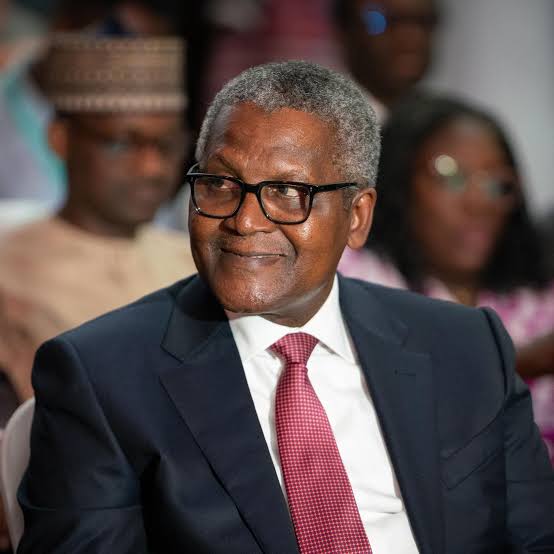
Firstly, we are excited for Aliko Dangote’s planned refinery in Kenya. It adds an important layer to African energy security and located as it shall be within reach at the East African coast – when completed its benefits shall be distributed in close proximity. All this is good.
Commenting in Kenya, where he is visiting for the groundbreaking of the industrial site in Lamu, he also went bare-knuckled on the execution dilemmas of large-scale projects on the continent. In particular he is reported to have said that the refinery in Hoima will not be physically a reality by the time he is ready at Lamu. On the difficulty of executing projects Dangote should know.
If you have not, you should watch his wonderful interview with Nicolai Tangen (the pod is “In Good Company” and Tangen is the head of the Norwegian Sovereign Wealth (pensions) Investment fund). In there he speaks of the poisonous arm wrestling with Nigerian politicians and bureaucrats he had to undergo. He also details his frustrations with the gruel and stickiness of political decision-making and overall vision of leaders. It is worth watching because apart from grit and experience, Aliko Dangote may be an Afro-optimist.
One of my takeaways from the show was that Aliko Dangote bet big and, eventually won. I am not fazed about his comments on the Hoima refinery because sincerely we all share, in Uganda, his concerns about the speed of execution. But predicting that there shall be little physical progress at Hoima when Lamu is finished is bullish, feisty and unnecessary.
There is no need for all of that.
I understand the gallery may love it (watching some of the social media around his visit he is certainly bristling and in full sales mode about the certainty of pulling off the “near impossible” in Kenya especially with the scale and speed of his company). But being in this combative mode is uncalled for, neither is the implied narrative here that governments do worse than private enterprises and so forth.
Aliko Dangote’s other comment that African governments should be careful with snake-oil selling investors that fail execute is true. It is true across the continent including at his current addresses and a fact of governance around the world where public institutions must build capacity to superintend over private enterprise.
I guess in advertising his work methods, he is saying how and why he is different. While we have a lot to learn from his experience for sure, he should also situate his own vision more imaginatively on what we can achieve together.
Back to Uganda. Let us take the worst possible scenario; that no refinery in Hoima is ever built.
Dangote should know that this would be quite painful for Uganda which has been navigating a winding path over a long period to achieve the goal of a domestic refinery and not because it is in competition with Kenya. In principle Uganda seeks a local refinery as an economically sound investment and a strategic necessity and shall continue on this path. This goal is complex enough and is sometimes in friction with the politics and intent of multiple interests embedded in the petrochemical ecosystem and markets, and there is evidence over the years how it has slowed down project execution, but it is what it is.
I was speaking with some Kenyan friends at the start of this year on how the Gulf conflicts has exposed us all. Now that it’s clearer the extent of East Africa’s fragility, no project or success of a project should be held up as a success for one alone.
Our region remains heavily dependent on imported finished petroleum products, roughly 80 percent from the Persian Gulf. The EAC has been one of the most affected regions in the world from the disruptions imported from that part of the world with higher prices, longer wait times for delivery from new sources as our geography means longer sea voyages, delayed cargos and premium insurance. Imported fuel products also means economically paying for access to an external franchise of refineries, shipping capacity and as geopolitics has now demonstrated – political stability elsewhere where we often have no leverage or control.
The mood on the continent is to build resilience by bringing these franchises home so that we are less vulnerable and not knocked about when say wars that we did not start nor are a part of, affect our own economic and social stability. So, refineries in East Africa whether in Hoima, Tanga or Lamu help refocus our development by shielding us, like a roof during the rain, from the ruinous shower of geopolitical and other international shocks.
They should in the long run make governments more capable of delivering on social goods and companies better placed to expand within this market.
Strategically Hoima for Uganda goes further because it is an inland refinery that would rely on Ugandan crude. It means it is much safer, amongst the current and future options, from a maritime crisis resulting from far flung events (obviously not from those inland). Most importantly just like Lamu and Tanga, Hoima will also contribute to the options available to the wider region if and when we face challenges of the sort we are dealing with today.
It is not, nor should it be seen as a prestige project competing for attention with Lamu or Kenya generally. In the end Uganda’s oil fields will be useful to Lamu, a nearer source of feedstock and, when operational, we hope Lamu too shall deliver more affordable oil products to Uganda as well.
Uganda is already an investor in Kenya’s energy sector and other opportunities might arise that are worth embracing.
Therefore, from where I stand, when taken together all the East African energy projects currently underway have the potential to insulate the region from external shocks. Given today’s dynamics the picture would be better even if just a proportion are completed. We could go from total import dependence to substantial energy security. I am particularly excited to include affordable domestic cooking gas when Tanzania’s fields come online.
As our options expand (and we are not straight jacketed as we are today) it should be the dawn of something bigger or more akin to Aliko Dangote’s personal vision for Africa.
So, sir, we are not in competition here ( but we are happy to learn).
Karibu.