Two stories stood out for me above the loud noise of the Middle East conflict.
The first was Kenya’s plans to add wide-body high-capacity cargo planes, these massive 767s, with a strategy to move to even bigger 777 freighters.
At first glance Kenya’s cargo-first strategy is kosher. It supports Kenyan producers of its wide renown agricultural exports. That also means East African exports. “Kenyan tea” or even coffee that brightens up a bad day somewhere in the world today is not unoften Ugandan in origin. Kenya Airways is committed to doubling cargo’s contribution to group revenues from 10% to 20% by end of 2026. This target makes sense only if the volumes are there to fill the planes which, in the case say of meat exports to the Gulf countries sometimes ends with “wheres the beef?”. Speaking with some Kenyan friends recently I argued that this augmented cargo capacity has to be viewed in the context of a strategic logistical pathway for East African exports into the GCC not just a Kenyan one.
It is even more important now.
When the geo-political headwinds stabilise, GCC countries will look more favourably at diversification toward Africa for reliable food imports. This is inevitable because shifts in the Gulf world view are inevitable. The Gulf imports 85% of its food. Just weeks to the Israel war on Iran in fact I met Ugandan coffee exporters in Dubai and was due to attend Gulfood 2026, scheduled for next week, one of the biggest Food and Beverage conferences of its kind worldwide. Logistical plays such as a solid cargo skyway indicate East Africa’s ability and intention to play in the big league of food exports that emphasizes the strengths of the region in the longer term. In the short term they also show that policymakers can view the Middle East conflict as revealing the strategic opportunities in this historical trading corridor that may have been obscured in the pre-war period.
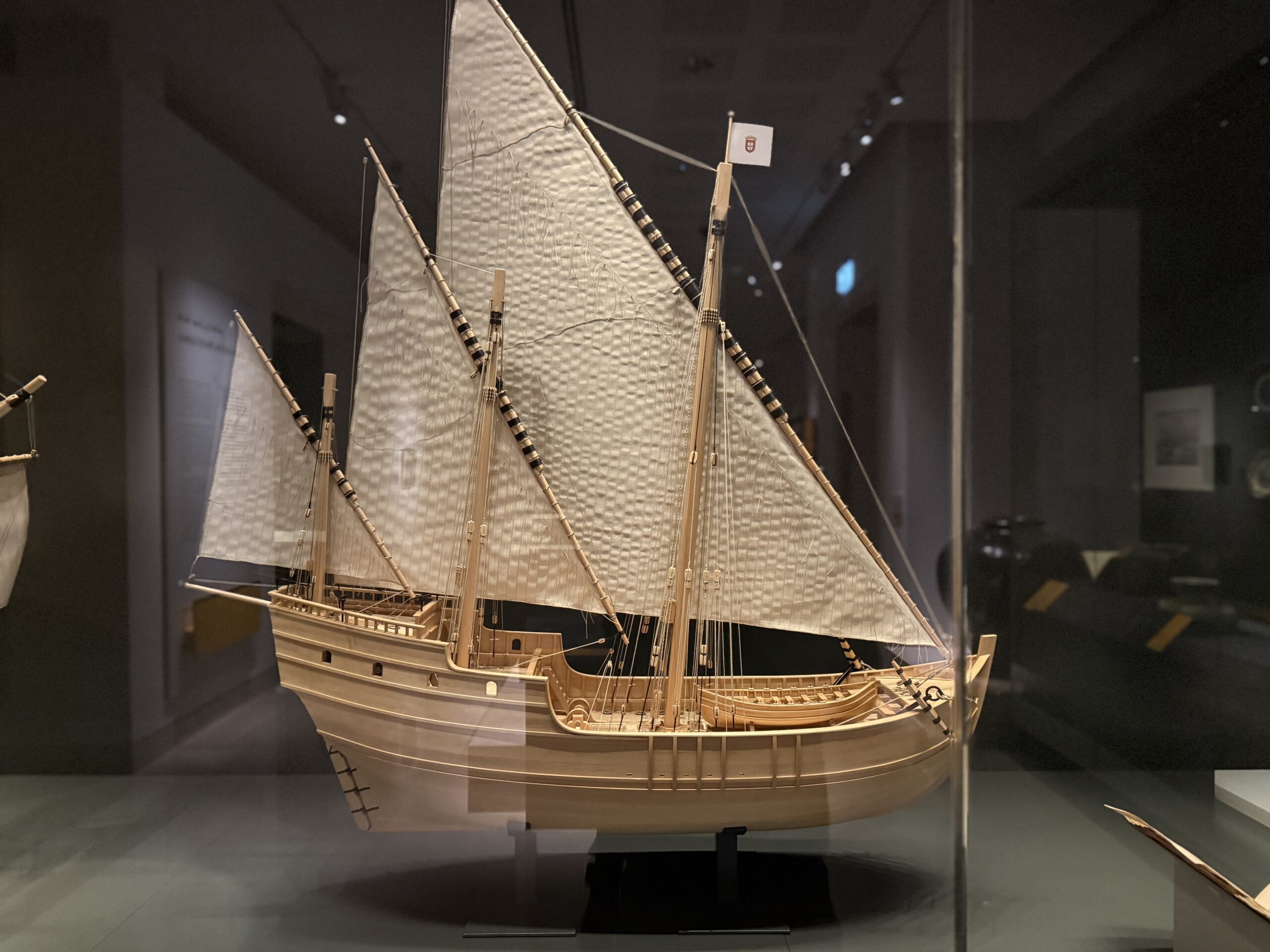
The world today, and perhaps even the Gulf countries, may have ceased to look at East Africa with critical geo-strategic ways as globalisation and in particular the post Second World War order shifted power decidedly to the West and in favor, economically, militarily and culturally away from an earlier period when dhows, eastern sailors and navigators held sway in the “Indian Ocean”. Back then the turbaned messengers that presented themselves in the East African interior at the court of the Kabaka of Buganda were part of the oldest commercial relationships on the planet; with the Gulf at the centre and Persia and India and even China at the outer rim.
Ugandan children learn about these headwinds as far back as the first century when monsoon winds drove a relationship between traders arriving with cloth, sugar and dates departed with ivory, cloves and so forth. There were slaves too of course.
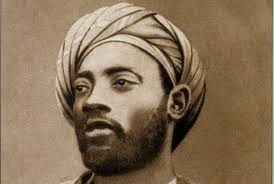
Kabaka Mwanga pictured here with an Omani style Mussar ( turban)
During the reign of Seyyid Said, in 1840 Oman moved the capital of the Sultanate from Muscat to Stone Town in Zanzibar, still the administrative home of the government today. This made the island the commercial centre of the Indian Ocean world and the administrative nerve of its trading empire. Swahili as a language is the heritage of these centuries. The goods that moved along these routes were the commodities of that era. It should not need a war to re-imagine these ties. The UAE and other Gulf countries are already leading sources of both trade and investment in the region. These relationships are deepening but the crisis certainly animates them today. Having flown from Muscat to Nairobi ( and visited the national Omani national museum) while passing through reminded me of how interwoven this coastline is and how in a different world, now past, the geo-strategic playbook was considerably different too.
As East Africa comes into its own, Uganda’s own long-suffering aviation reforms as well as cold storage logistical infrastructure not withstanding, policymakers who are evaluating the geo-economics of the Middle East conflict with a view to proposing stronger relationships in that critical part of the world must keep in mind that history has a tendency to tread familiar paths.
A second story that stood out is Rwanda’s ambitious nuclear energy plans. In keeping with its national philosophy of Agaciro ( manifesting dignity and self worth) these plans announced by President Paul Kagame are a clear statement of a modern solution to sustainable energy supply for its economy. President Kagame says a $5–6 billion investment in small modular reactors, with nuclear targeted to supply 60–70% of Rwanda’s energy mix, will be a reality in a few years ( Clock it).
Rwanda is a landlocked country with no oil and limited hydro headroom . The nuclear energy plan is thus one of the most consequential energy bets on its future. Rwanda is also key member state of the East African community with an elevated relationship with the Gulf states. Put that aside its nuclear bid is a major play in the energy challenges that face the region. A timely one too, not just because the conflict in the Gulf is a constant reminder of the need for planned resilience, but also because the nuclear energy strategy will sit next to Uganda’s own arrival this year as an oil producing country.
Uganda’s plans, which include a petrochemical industrial park and oil refinery , are designed for economic ( and political) resilience. The oil sector embedded local refining into its strategy ( it is in the law) as part of the general approach to indigenisation of mineral value chains . Uganda banned export of raw minerals in 2015 , a policy now being emulated by other African countries and for good reason. I recall the arguments nearly two decades ago for an Early Production Scheme for Uganda which looked at fast-tracking oil refining. At the time, I was in favour of a loss-making refinery that would add diesel, kerosene and petrol to the East African market, allowing Uganda’s transport sector to breathe more easily with cheaper oils. The main government plan was for a commercially successful one. The former argument was that with lower transport and logistics costs, production would improve and the country would then collect the dividends in better taxes from expanded economic conditions. It is a longer story as to what happened but even now, in light of the crisis in the Gulf, fast-tracking a refinery as an emergency can be justified because the conflict makes the same argument about economic resilience and strategic autonomy that was the original thinking of the government of Uganda. The cost of the two projects ( nuclear , Rwanda and oil, Uganda) are similar and one would argue that viewed from regional lenses and in light of the global conflict underway both highlight a positive response, via economic planning, to the demands of the day.
Rwanda which imports not insignificant amount of electricity from Uganda may one day support it with a more consistent nuclear option while Uganda whose oil project is today the most “East African” industrial and infrastructure project should be able to be a reliable source of fertiliser for the region. East Africa’s geography and history thus came to mind in light of the Gulf crisis and if there is one final lesson that the news headlines are delivering daily now it is that integration is no longer a choice but essential for future stability.