The Pope and the “African” President

It happened immediately. Almost as soon as Pope Benedict XVI announced he was leaving his position- Africans including many Ugandans took to social media and radio stations to laud his example as something their leaders should emulate. Roman Catholicism is a majority religion in many parts of Africa- and black by association to Latin America. In this way it is a religion of “underdevelopment” or of the “underdeveloped”.

urlThus the decision of the revered Pope to make history at the Papacy with his resignation, a first in modern times, has a special reverberation.

His decision, brave and heroic will be treated as a legacy worth following in Africa and will form part of the view now of what African leaders should do- could do.

One is reminded of that picture of Venezuela’s ailing President Hugo Chavez and the Pope. Chavez despite his health won another election recently but could not attend his own inauguration due to ill health. Venezuela titters on uncertainty as his larger than life personality, in that majority Catholic country, becomes a focus of how power is transitioned.

It will probably end up untidy and many Venezuelans who light a candle for Chavez as they pray with the Pope- must wonder how different the two examples are. A President that fights on and refuses to leave the stage and the most conservative Pontiff in recent times who sees the merit in handing over his responsibility in order that his charge continues and is not distracted by his own more private tribulations.

In understanding the reaction of African state houses which like Uganda may have such national motto’s as “For God and My Country” and often pray for their leaders to be “guided” into sensible decisions- one must appreciate that resignation is an alien practice.

It is in some ways part of the old “theology” of rule, which is associated with something godly and therefore uninterrupted by man-made decisions. When this issue comes up resignation is spoken of as part of the toolkit of modern governance- that supports a higher moral duty for public officers.

285668_531582226887015_676150719_nSupporters of many leaders , exceptional in their prime- like to also think of their role as divine and construct a divinity around their personality. If the Pontiff was alive to this fact most Africans are only awakened by his “modern” approach to his responsibilities as a Pope.

Resignation is man-made, save for the Bishop of Rome, who by commission is guided by a higher power. True the church is over “2000” years old and some may well say its lessons even one as shocking as a Pope’s resignation may take another 2000 to learn- but many will now ask that their secular leaders turn a page even as they receive prayers from their supporters.

There is something else about resigning- it’s a sacrifice. It means relinquishing privilege and yes power. Many Africans may recognize their leaders claims of sacrificing for a greater cause. However they also see resignation or demand it as a cure for incompetence not to advance competence by way of guaranteeing continuity. So the Pope’s resignation is a prudent and competent act but many African leaders called to resign are facing such pressure because many view that their good days are behind them and worse- it’s unclear who will replace them.

There is another more political utility of resignation in the way that it bridges controversial transitions of power. Alongside term limits, impeachment and death in office, a resignation is one way to hand over power to a trusted lieutenant and successor to run the government ahead of their succession. The one country, which comes to mind, is Botswana where the current President Ian Kharma was handed power [as a Vice President] by his predecessor Festus Mogae.

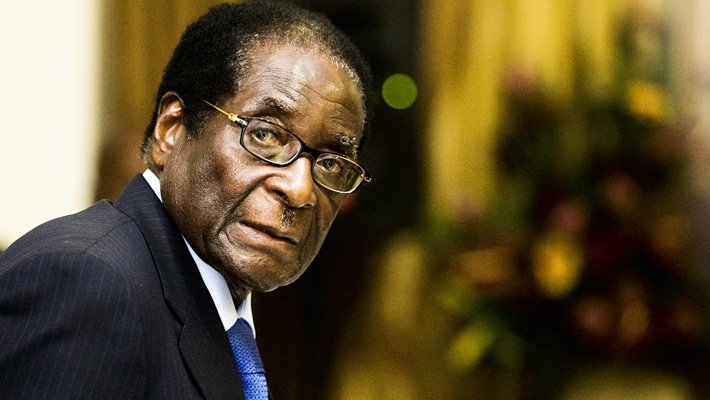
Granted there is no adult suffrage for President in that country but the continuity amongst others has made Botswana a less volatile place than say Zimbabwe where Robert Gabriel Mugabe was raised a devout Catholic. A resignation by President Mugabe [seen at the funeral of the last Pope above]would be as shocking as Pope Benedict’s but hardly something that Zimbabweans can expect.

End Notes: On Taylor’s conviction and Africa’s global image

While mulling over the “historical” conviction of Mr. Charles Taylor for war crimes and crimes against humanity I kept thinking of India’s recent lease of a nuclear sub-marine from Russia, its nuclear and space program, and its launch of a long range missile recently.   “Afrika’s” principal challenge is its lack of ambition.

The problem is not just institutional even if would be helpful if we cracked that one too. Mobilising ambition ala India or China requires institutional architecture for sure. But before that brand Africa needs something else. I met a journalist of Indian origin and told her about this. “ Sure. India has more poor people than Sub-Saharan Africa but it is thought of differently. Its about the tech industry, about Bollywood” she said. I agreed and shared with her some stories of flying to San Francisco on Emirates Air. Ice, the in-house entertainment system has more Bollywood movies than any other. The plane too is often filled with young Indians headed to Silicon Valley. It makes sense. What is Indian may be diverse but there is clarity there too. In this way its weapons program might be seen as justifiable in providing gravitas to brand India- possibly the next superpower.

One feels pity for Mr. Taylor. He is the latest historical reference of something that we were tried to debate this week during the BBC Africa Debate (which ultimately was a collection of defensive voices by Africans and little debate). Taylor’s conviction is a statement also of Africa’s place in the global food chain. It affirms that negative brand. The violence of peasants with guns even if they are led by colorful and sometimes western educated elites is bound to be primordial. But again violence by machetes is viewed differently from that meted out by smart bombs run by professional armies. However both scenes of human suffering are often assigned different moral categories in the discourse.

Those who say the World Court at The Hague is an African court belabor this point differently. It’s not just that these crimes do occur in Africa. It is their reception too. Yes, Taylor may be the most high profile former head of government to face international justice- but these are not the Nuremberg trials.It would be a different day if ever the African constituency departs the court. One wonders indeed whether it would be the court we imagine it to be then.

Mr. Taylor, the evil promoter of the mutilation of innocents, the sleazy womanizer (Naomi Campbell comes to mind for how can he indeed have the gumption I suppose) is seen as a despicable person. Taylor that operator, gunrunner, alleged spy and diamond seller to Antwerp and Tel Aviv is an associate of a world that never survives the history of his own crimes.

In a very African sense his story is valuable for what it has left out. Others will bleed this for bias but whether or not you are one of those who seek out a conspiracy of who made Frankenstein Africa or rather why Africans do not take responsibility period: it remains that his story aids an existing view. Africa is not India, it is not China or Brazil. In fact South Africa is not Africa either.

For what its worth not in gold, esteem or prestige Mr. Taylor’s verdict will resonate loudly in the Great Lakes region for two reasons. He has been found guilty of “aiding and abetting” crimes against humanity. The crimes however were committed in Sierra Leone from his base of power in Liberia. Secondly he will likely also go away for life. While the chain of custody for his crimes may be wider for conspiracy theorists- the transnational aspect is important in these parts.

The Taylor verdict will be looked at as the real watershed in how agency works in war crimes and their prosecution at The Hague.  Jean-Pierre Bemba, former Congolese warlord and one time presidential hopeful is in custody at The Hague for crimes not committed in Congo but rather in Central Africa Republic.  This question of agent versus principal is one of the most pressing challenges for the International Criminal Court and its African suspects.

In almost all cases including that of rebel leader Joseph Kony of the Lord’s Resistance Army (LRA) the alleged crimes are committed partly in service of some kind of patron.  In the case of the LRA its terror muscle was flexed as a component of the military strategy of the government of Omar El Bashir of Sudan. While Bashir is himself an ICC suspect, the first sitting head of state in fact to be indicted, he is being accused of separate crimes, his relationship to the great proxy wars within the Sudan, Northern Uganda and now Congo/CAR have not been connected.

Another Congolese victim of international justice is Thomas Lubanga one of the pageboys for this sort of criminal outsourcing.  All of the Congolese potential war crimes suspects are but agents of the logic of conflict in the Great Lakes. Folks like Bosco Ntaganda, Laurent Nkunda and others are adjutants in proxy wars. This is a well-known fact within the ICC establishment and a subject of several related United Nations reports. However because the ICC works with states parties (basically incumbents governments, their leaders and international donor supporters) it is fed on small fish that are served up strongly in the political symbolism of international justice. Other stronger nations have a bigger say in what happens to and do not have to play the same role in this symbolism. They can make their own narrative.

There is nothing wrong with might. It may not be right but it tells its own story.

Follow

Get every new post delivered to your Inbox.

Join 7,452 other followers

%d bloggers like this: