End Notes: On Taylor’s conviction and Africa’s global image

While mulling over the “historical” conviction of Mr. Charles Taylor for war crimes and crimes against humanity I kept thinking of India’s recent lease of a nuclear sub-marine from Russia, its nuclear and space program, and its launch of a long range missile recently.   “Afrika’s” principal challenge is its lack of ambition.

The problem is not just institutional even if would be helpful if we cracked that one too. Mobilising ambition ala India or China requires institutional architecture for sure. But before that brand Africa needs something else. I met a journalist of Indian origin and told her about this. “ Sure. India has more poor people than Sub-Saharan Africa but it is thought of differently. Its about the tech industry, about Bollywood” she said. I agreed and shared with her some stories of flying to San Francisco on Emirates Air. Ice, the in-house entertainment system has more Bollywood movies than any other. The plane too is often filled with young Indians headed to Silicon Valley. It makes sense. What is Indian may be diverse but there is clarity there too. In this way its weapons program might be seen as justifiable in providing gravitas to brand India- possibly the next superpower.

One feels pity for Mr. Taylor. He is the latest historical reference of something that we were tried to debate this week during the BBC Africa Debate (which ultimately was a collection of defensive voices by Africans and little debate). Taylor’s conviction is a statement also of Africa’s place in the global food chain. It affirms that negative brand. The violence of peasants with guns even if they are led by colorful and sometimes western educated elites is bound to be primordial. But again violence by machetes is viewed differently from that meted out by smart bombs run by professional armies. However both scenes of human suffering are often assigned different moral categories in the discourse.

Those who say the World Court at The Hague is an African court belabor this point differently. It’s not just that these crimes do occur in Africa. It is their reception too. Yes, Taylor may be the most high profile former head of government to face international justice- but these are not the Nuremberg trials.It would be a different day if ever the African constituency departs the court. One wonders indeed whether it would be the court we imagine it to be then.

Mr. Taylor, the evil promoter of the mutilation of innocents, the sleazy womanizer (Naomi Campbell comes to mind for how can he indeed have the gumption I suppose) is seen as a despicable person. Taylor that operator, gunrunner, alleged spy and diamond seller to Antwerp and Tel Aviv is an associate of a world that never survives the history of his own crimes.

In a very African sense his story is valuable for what it has left out. Others will bleed this for bias but whether or not you are one of those who seek out a conspiracy of who made Frankenstein Africa or rather why Africans do not take responsibility period: it remains that his story aids an existing view. Africa is not India, it is not China or Brazil. In fact South Africa is not Africa either.

For what its worth not in gold, esteem or prestige Mr. Taylor’s verdict will resonate loudly in the Great Lakes region for two reasons. He has been found guilty of “aiding and abetting” crimes against humanity. The crimes however were committed in Sierra Leone from his base of power in Liberia. Secondly he will likely also go away for life. While the chain of custody for his crimes may be wider for conspiracy theorists- the transnational aspect is important in these parts.

The Taylor verdict will be looked at as the real watershed in how agency works in war crimes and their prosecution at The Hague.  Jean-Pierre Bemba, former Congolese warlord and one time presidential hopeful is in custody at The Hague for crimes not committed in Congo but rather in Central Africa Republic.  This question of agent versus principal is one of the most pressing challenges for the International Criminal Court and its African suspects.

In almost all cases including that of rebel leader Joseph Kony of the Lord’s Resistance Army (LRA) the alleged crimes are committed partly in service of some kind of patron.  In the case of the LRA its terror muscle was flexed as a component of the military strategy of the government of Omar El Bashir of Sudan. While Bashir is himself an ICC suspect, the first sitting head of state in fact to be indicted, he is being accused of separate crimes, his relationship to the great proxy wars within the Sudan, Northern Uganda and now Congo/CAR have not been connected.

Another Congolese victim of international justice is Thomas Lubanga one of the pageboys for this sort of criminal outsourcing.  All of the Congolese potential war crimes suspects are but agents of the logic of conflict in the Great Lakes. Folks like Bosco Ntaganda, Laurent Nkunda and others are adjutants in proxy wars. This is a well-known fact within the ICC establishment and a subject of several related United Nations reports. However because the ICC works with states parties (basically incumbents governments, their leaders and international donor supporters) it is fed on small fish that are served up strongly in the political symbolism of international justice. Other stronger nations have a bigger say in what happens to and do not have to play the same role in this symbolism. They can make their own narrative.

There is nothing wrong with might. It may not be right but it tells its own story.

Oil and Gas Scrapbook: Lafarge, EA Gold Sniffing lose rights to Kasese concession in far reaching government ruling

Energy Minister Ms Irene Muloni last week held an administrative ruling over the contested Kasese based limestone mining concession previously operated by Hima Cement, a subsidiary of the French firm Lafarge.
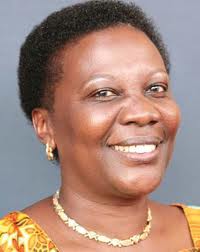
Sources familiar with the ruling, which reportedly happened at Amber House- the Ministry headquarters, confirm that she informed Hima Cement and East Africa Gold Sniffing, a prospecting firm that had acquired exploration rights over the lease that both their claims would be voided. Its unclear what this means for the mining concession which is an important part of Hima Cement’s portfolio.

The Lafarge owned company recently invested US$ 120 million in its Uganda operations. The Minister’s decision also affects EA Gold Sniffing which this month signed a Letter of Intent with Canada listed Brandenberg Group dependant on delivering the contested license. In her administrative ruling, a formal copy of which is expected to be delivered to the parties this week, Muloni reportedly said while Hima had allowed its license to lapse without reapplication, EA Gold Sniffing’s own exploration license was awarded in error.

A brief back ground

Until the operator for the Kasese based concession changed hands it was held by Hima for the standard period of 21 years from the 1st of January 1991. Hima’s woes stem from the company’s failure to file a request for renewal. EA Gold Sniffing subsequently applied for an exploration license, which was granted to the firm, a newcomer to Uganda’s mining sector. Hima contested the circumstances of the award but apparently could not convince the Minister that any other party bore responsibility for the company’s failure to reapply. What will be in issue eventually is whether the government can defend the cancellation of EA Gold Sniffing’s exploration license in court.

The case recalls another dispute between the government, Hima Cement and Dura Cement, which ended up in a settlement of US$ 16M. In that case Dura that held a license subsequently awarded to Hima was compensated for the government decision to retain Hima as operator. A letter written on 24th February this year by Commissioner John Odida explaining the decision by the Department of Geology to award EA Gold Sniffing its license said the action was undertaken after Hima’s license had expired without any request for renewal. In his letter Odida suggested the company seek administrative review.

Muloni’s decision itself is controversial. If Hima was no longer a party to the license in the first place its inclusion in any review is primarily a political decision not well grounded in the law- an issue likely to return to haunt the Ministry if litigation from this case is brought. Uganda’s mining sector does not receive much attention having a few major players of which Hima is one of the largest.

What it means?

The manner in which this dispute was handled will be of considerable interest not just to investors in this area but in the more visible but newer oil and gas sector. One of the controversial moments in Uganda’s oil sector was when London listed Tullow faced commercial pressure on its Ugandan assets following a Sale and Purchase agreement its partner Heritage Oil entered with Italy’s ENI. At the height of the tension Tullow’s license for Block 3A, the jewel in its holdings was withdrawn by Hon Hilary Onek the predecessor to Muloni. The government claimed then that Tullow had not filed for renewal facts, which were not contested by the company.

The matter was controversially cured by a “Memorandum of Understanding” whose legal validity has been questioned by pro-transparency legislators in the now famous “oil debate” of last year. The issue still hangs over Tullow and is one of the lines of inquiry that a parliamentary committee set up after the oil debate is pursuing.

At the heart of these disputes is the political supervision of commercial battles in the resource sector. Tullow and Heritage Oil this June will begin hearing of yet another controversy between the companies over the Capital Gains Tax crisis. In its papers filed in a court in London Heritage accuses Tullow of wrongfully making a “political payment” to the government of Uganda when the latter paid its share of CGT even as it was being contested. The conclusion that Tullow perhaps went beyond the gray in paying the Ugandan government a contested tax when it faced pressure over its own licenses raises a question of how active politics is in settling these disputes. It may appear that well connected companies have an edge over their rivals or even newcomers. On the side of the Ugandan government the desire to expedite commercial operations in these sectors while acting as an honest broker has been tested by the oil bribery allegation a constant talking point even if they were in the end unproven. In the Hima/EA Gold dispute  its past history of sheltering Hima Cement will likely be recalled.  The license will for now remain un-awarded until after 90 days following a written ruling.

Follow

Get every new post delivered to your Inbox.

Join 7,456 other followers

%d bloggers like this: